Scroll to explore
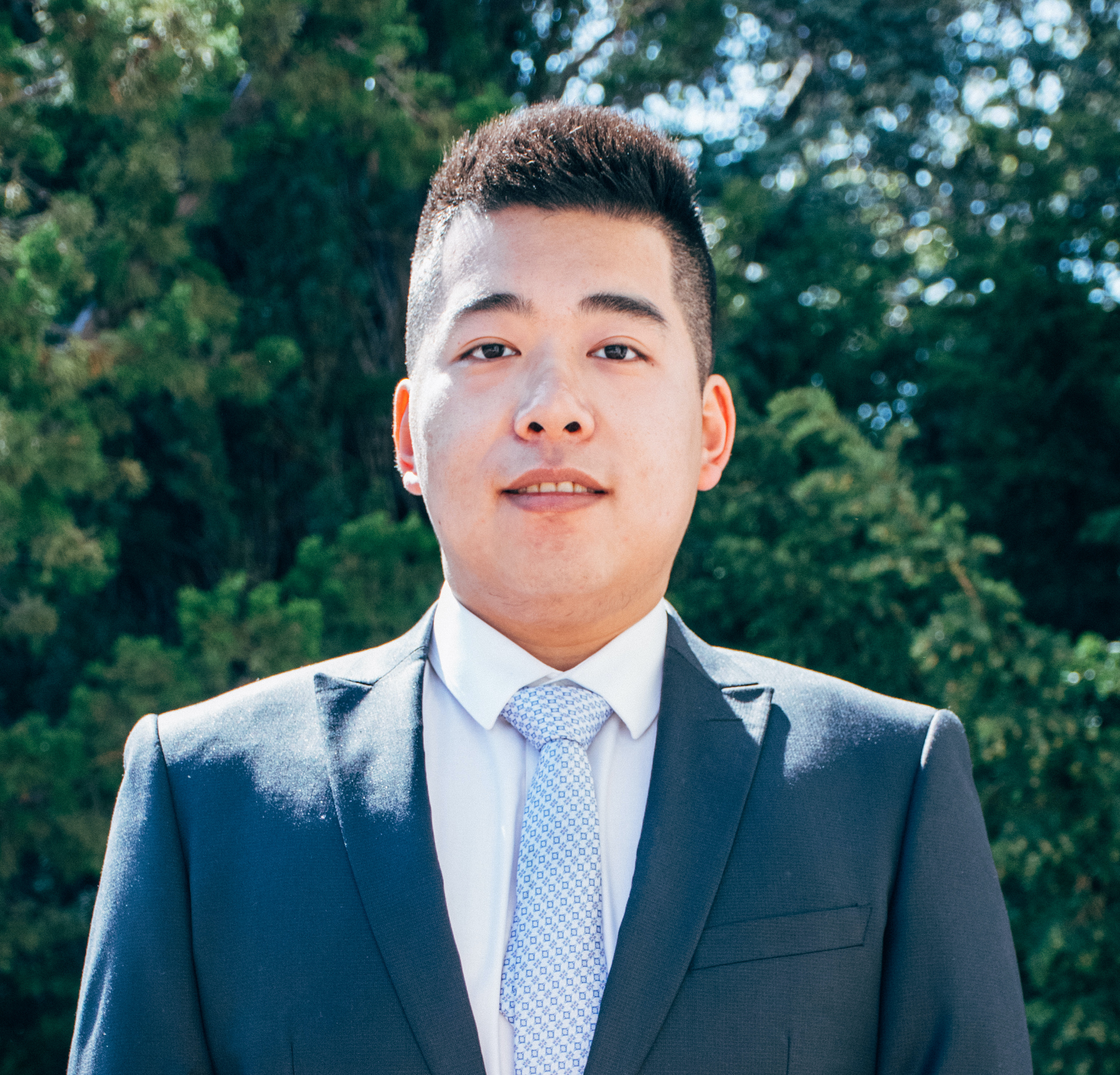
Harry Liang
Make AI genuinely useful for real-world physical applications and scientific discovery.
I translate experimental and manufacturing data into deployable engineering solutions using physics-informed machine learning and large-scale scientific computing.
Data → Models → Real-world solutions
Tesla · Senior Modeling Engineer
Previously: MIT PhD · XtalPi
8 years of modeling experience
Education
Massachusetts Institute of Technology
Ph.D. Computational Science & Materials Science
Massachusetts Institute of Technology
M.S. Materials Science and Engineering
University of California, Berkeley
B.S. Materials Science and Engineering
Expertise
Machine Learning & AI
Programming & Computing
Scientific Modeling
Experience
Tesla
Senior Modeling Engineer
Jun 2024 — Present
+
Physics-informed ML and multiphysics modeling for automated simulation and optimization of next-generation batteries.
- Built an end-to-end agentic AI framework leveraging LLM-based reasoning to autonomously convert battery characterization data into calibrated multiphysics models and firmware-deployable neural network surrogate models, enabling a scalable pipeline from new battery prototypes to production-ready control solutions.
- Developed physics-informed neural network surrogate models to predict anode potential across charging rates and aging scenarios, using sliding-window convolutional architectures for real-time firmware-level inference without expensive multiphysics simulations, as a core inference engine within the agent framework.
- Designed reinforcement learning workflows for autonomous calibration of physics-based battery models across high-dimensional, multi-parameter spaces, serving as the optimization engine within the agent framework.
- Led Bayesian optimization for model-driven electrode design, identifying optimal laser-ablated patterns for fast-charge performance
- Architected P2D electrochemical simulation frameworks quantifying current density non-uniformity across cylindrical and prismatic cell formats
- Developed fast-charge safety models defining physical operating boundaries for next-gen EVs and Megapack energy storage, supporting 4+ cell programs with leading global lithium-ion battery vendors by translating modeling insights into cell performance specifications and charge tables.
MIT Bazant Research Group
Graduate Researcher
Sep 2021 — May 2024
+
Physics-based and data-driven modeling of multi-active materials electrode batteries.
- Developed interpretable ML models (GAM, XGBoost) on large-scale battery testing and manufacturing data to predict cell performance
- Built hybrid physics–ML frameworks combining electrochemical models with data-driven learning for cell-to-cell variation prediction
- Created physics-based models for implantable medical device batteries, optimizing CFx-SVO mix ratios for improved pulse performance
- Developed Hybrid-MPET, first open-source Python framework for multi-active material porous electrode battery simulation
Tesla
Intern Modeling Engineer
June 2023 — Aug 2023
+
Physics-based battery modeling to support engineering decisions.
- Developed 3D porous electrode (P2D) models to study the impact of manufacturing deviation on Li plating for Tesla in-house cells and support management decision making.
- Developed parallel unit-cell type P2D models that account for cylindrical cell non-uniformities (temperature, curvature, manufacturing deviation, etc.). Improved the speed to generate fast charge profiles for Tesla in-house cells, reduced from >24 hours to < 20 minutes.
- Proposed and validated new theoretical relations in the field of porous electrode modeling to break down direct current resistance (DCR) Li-ion batteries with multi-active material electrodes.
XtalPi
Machine Learning Research Intern
Jun 2021 — Aug 2021
+
Bayesian optimization for data-efficient and closed-loop optimization of complex pharmaceutical production processes.
- Developed trust-region Bayesian optimization for data-efficient global optimization in high-dimensional pharmaceutical processes
- Created multi-objective Bayesian optimization algorithms autonomously optimizing bioprocess yield while minimizing byproducts
MIT PV Lab & MIT CSAIL Sensing, Learning and Inference Lab
Graduate Researcher
Sep 2019 — Aug 2021
+
Machine learning accelerated scientific discovery in materials and molecular systems.
- Developed generative AI framework using VAEs for inverse design of inorganic crystals with targeted electronic properties
- Generated 142 new candidate crystals with targeted electronic properties, validated via first-principles DFT simulations
- Built active learning and Bayesian optimization strategies achieving 4–16× reduction in experimental sample requirements
- Developed graph neural networks predicting antibiotic efficacy, enhanced via transfer learning for structure–property relationships
Lawrence Berkeley National Laboratory
Researcher
Jan 2018 — May 2019
+
Data-driven computational materials science research.
- Developed and launched first open-source DFT Raman spectra database for the Materials Project
- Executed large-scale first-principles simulations on high-performance computing (HPC) clusters as part of the U.S. Materials Genome Initiative